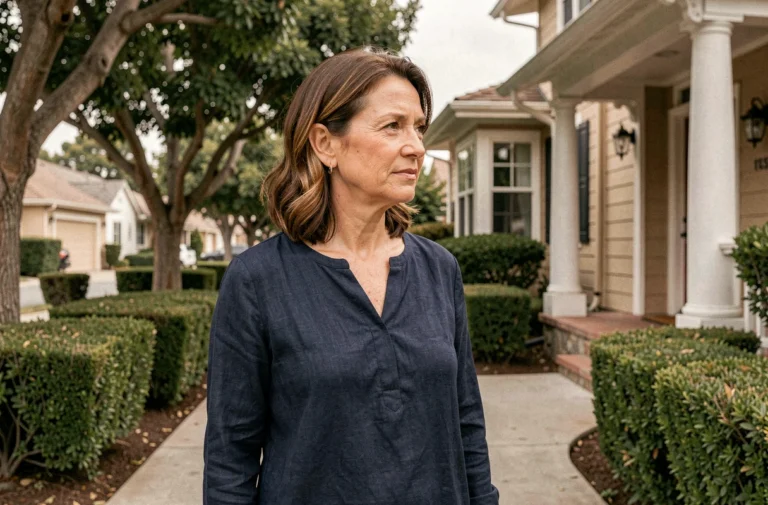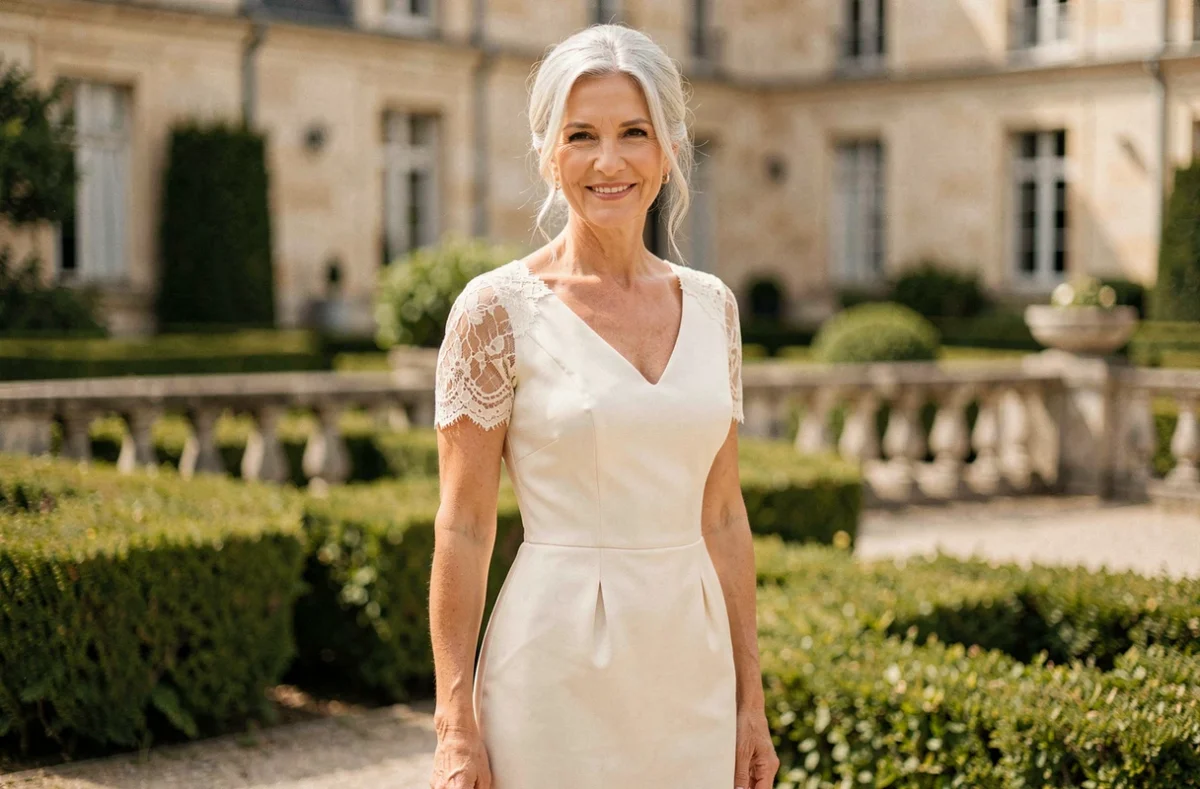
We accompanied a 63-year-old friend to three boutiques before understanding the real problem: the saleswomen systematically offered dresses designed for 25-year-old brides, just in a size up. The result was unsuitable for the desired support or the type of ceremony planned. Finding a wedding dress after 60 requires starting from what one will actually do that day, not from a fixed ideal.
Fabrics and comfort: what changes concretely after 60 for a wedding dress
The first instinct in a boutique is to touch the fabric, and that’s the right approach. After 60, the skin reacts differently to friction, synthetic linings, and rigid structures. A dress worn for six to eight hours straight does not forgive a poor choice of material.
Crape and stretch satin offer a fluidity that moves with you without clinging. Lace placed over a soft lining allows for dressing the arms and neckline without unwanted transparency.
When looking for senior wedding dress ideas, the question of comfort always comes first. Invisible zippers in the back and soft three-quarter sleeves advantageously replace lace-up corsets. The goal remains simple: to be able to sit, walk, and dance without adjusting your outfit every ten minutes.
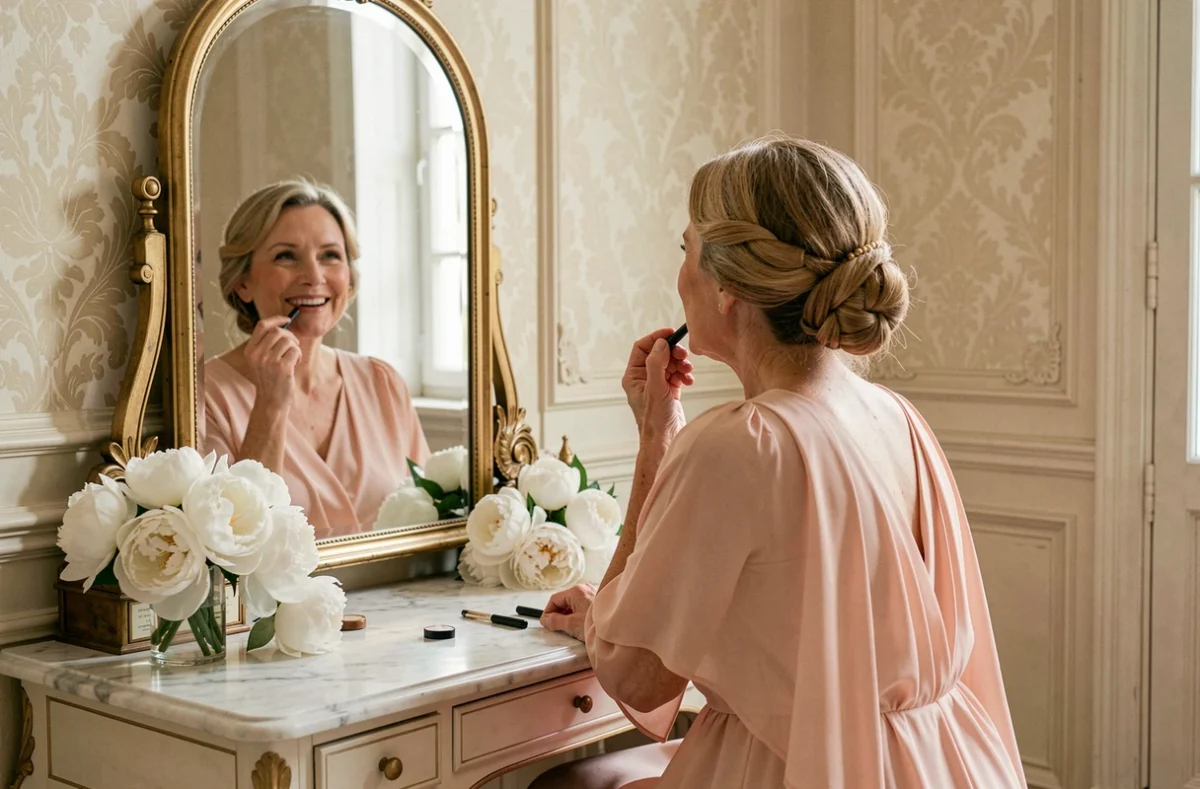
Dress cuts suitable for body shape after 60
Competitors often list names of cuts without explaining in which concrete case each works. We will do it differently.
A-line cut: for those who want to forget their dress
The A-line cut forgives almost everything. Fitted under the bust, it flares without squeezing the hips or belly. It’s the dress you slip on and forget. For an outdoor wedding with a lot of walking (garden, vineyard), it remains the most functional choice.
Sheath in crape: when the ceremony is short
The sheath shapes the silhouette without compressing it, provided you choose a stretch crape with enough elasticity. This cut is suitable for civil weddings followed by a cocktail. However, for a full day with a seated reception, the sheath can become restrictive around the knees.
Midi dress: the underestimated format
The midi length (below the knee) frees the ankles and lightens the silhouette. It works particularly well with flat shoes or low heels, which is important when planning to stand during the cocktail hour. The midi dress can easily be worn again after the wedding, making it a pragmatic choice for those who don’t want a one-time outfit.
Colors and details for a senior wedding: stepping away from default white
Full white is not mandatory, and many brides over 60 find it too stark for their complexion. Alternatives exist, and they are not all obvious.
- Off-white and ivory soften the contrast with the skin and suit most skin tones. This is the most common compromise.
- Champagne or pale gold adds warmth without stepping outside the bridal palette. These shades work very well in natural light.
- Powder blue or dusty rose allow for a real difference while remaining within an elegant palette. They are increasingly seen at intimate ceremonies.
On the detail side, discreet embroidery on the sleeves or neckline advantageously replaces rhinestones and sequins, which catch light in an unflattering way in photos. A lace detail at the wrists or back is enough to add dimension without overwhelming.
Fitting and alterations: concrete pitfalls to avoid
The fitting is the moment when everything is at stake, and it’s also where mistakes concentrate. A few points deserve special attention.
Check the accessibility of the boutique before making an appointment. Fitting rooms are not all suitable for people with reduced mobility. If you have difficulty lifting your arms or getting on a platform, let them know in advance so the saleswoman can prepare an appropriate space.
Alterations represent a cost that is systematically underestimated. Shortening a hem, adjusting the shoulders, taking in the waist: each modification has a cost that adds to the price of the dress. Request an alteration estimate at the first fitting, not after the purchase.
Rental and second-hand: comparing the real costs
Rental seems economical on paper, but cleaning fees, deposits, and return conditions can reduce the gap with a new purchase. Second-hand presents the same type of variable: a used dress that requires significant alterations can sometimes end up being more expensive than a new entry-level model. The total budget always includes the dress, alterations, and accessories.
Transformable outfit and use after the wedding
A common question among senior brides is: will this dress sit in a closet after the ceremony? The answer depends on the initial choice.
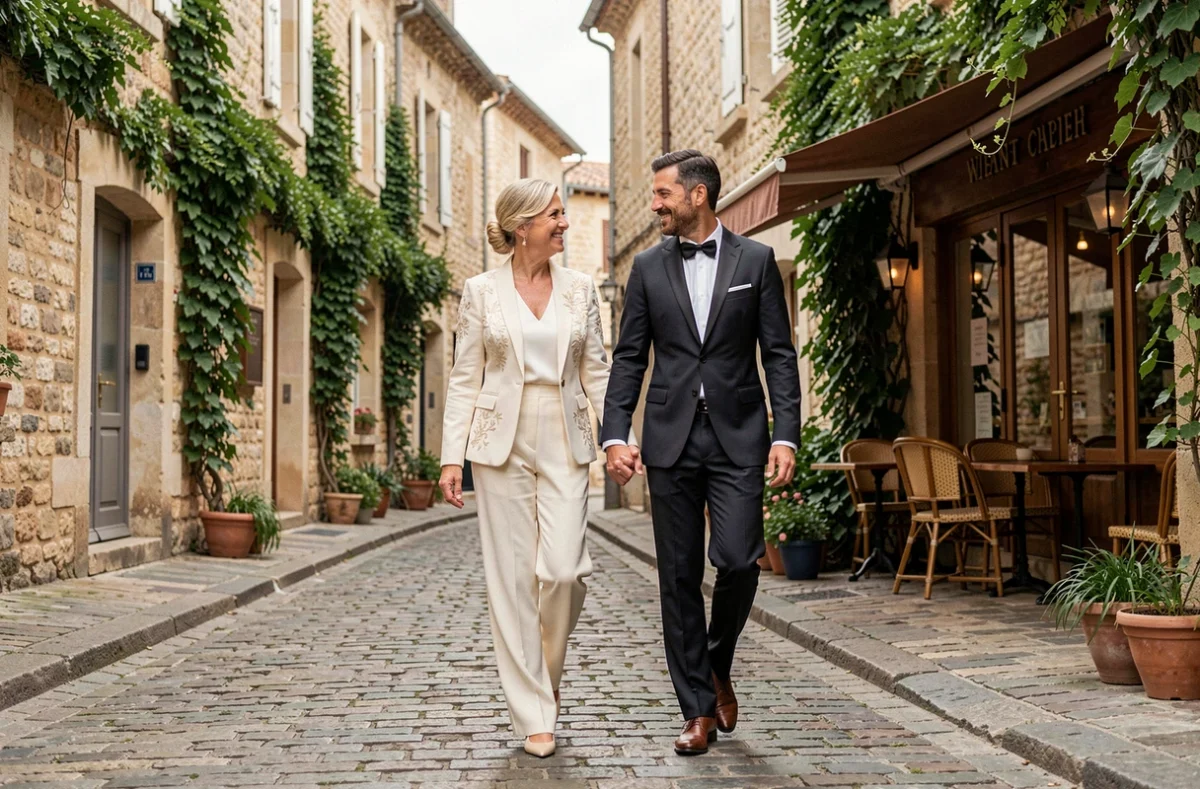
A crape pantsuit or a flowy jumpsuit can be easily worn again at family events, parties, or gatherings. A long white lace dress, much less so. Choosing an outfit that can be worn again changes the way you view the budget.
Two-piece sets (midi skirt and tailored top, or wide pants and short jacket) offer a flexibility that a traditional dress does not allow. You can wear the top with jeans three months later, and the skirt with a cashmere sweater. This calculation may seem trivial, but it matters when rejecting the principle of a one-time outfit.
A wedding after 60 imposes no predefined dress code. The only constraint that matters is that of real comfort, tested during the fitting, in conditions closest to the planned day. The rest, the cut, the color, the length, is decided based on what one plans to do and not on what one thinks they should wear.