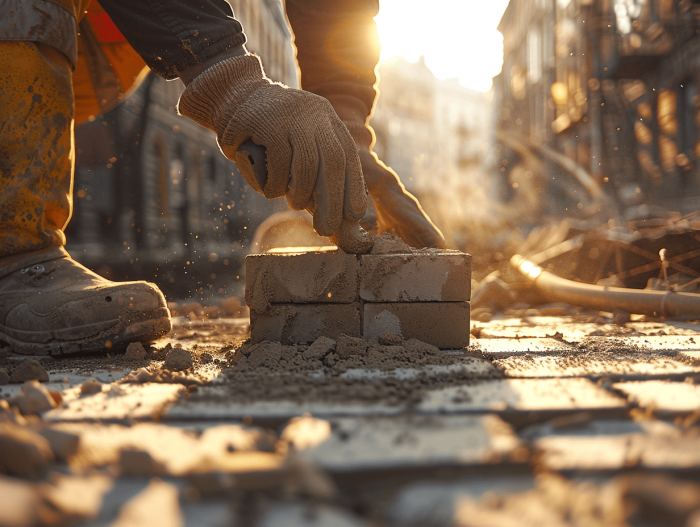
In the construction field, adhesive mortar is an essential ally for many tasks, ranging from tile laying to the assembly of brick or block walls. When misused, it can lead to issues with strength and durability. Specific techniques and a few tips can make all the difference in optimizing its use. From the proper preparation of the surface to choosing the right type of mortar for each application, as well as mastering setting times and drying conditions, every step is crucial to ensure the solidity and longevity of the completed work.
Mastering the application of adhesive mortar for sustainable construction
The application of adhesive mortar, or MAP, is a fundamental technique for installing plasterboard and wall insulation. Construction professionals agree on the effectiveness of MAP for permanently bonding these elements to various substrates such as brick, concrete, or cellular concrete walls. The application method of the mortar, whether in blobs or strips, must be mastered precisely to ensure optimal adhesion and avoid future issues.
Preparing the receiving surface is a critical step: the wall must be clean and free of any impurities that could harm adhesion. Manufacturers, such as LafargePlatre or WeberBroutin, offer MAP with specific properties, often available under various names. Knowing the products offered by each manufacturer allows for selecting the most suitable solution for bonding plasterboard panels.
The adhesive mortar powder must be mixed with water according to a precise dosage, appropriately indicated by the manufacturer. This manipulation directly affects the setting time and the durability of the adhesion. The working time of the MAP, generally around 1 hour and 30 minutes, provides a comfortable window for application but requires meticulous organization to avoid material waste.
Considering the drying time of the MAP is essential. Too fast or too slow drying can compromise the quality of the installation. The MAP, which is harder than plaster and can be used as a filling compound, can be stored in dry conditions for up to six months. Follow the manufacturers’ recommendations regarding drying conditions and adjust your work schedule to allow the adhesive mortar to reveal its full potential.
Best practices for optimal drying and adhesion of adhesive mortar
Ensuring impeccable adhesion of adhesive mortar undoubtedly involves mastering its drying process. This process is influenced by factors such as temperature and ambient humidity, which must be monitored closely. The ideal environmental conditions for even drying are neither too humid nor excessively dry. The ambient temperature, preferably moderate, plays a decisive role in the drying speed and thus in the final strength of the adhesion.
Given the variety of adhesive mortars available on the market, adhering to the water dosage indicated by manufacturers is a golden rule. Incorrect dosing can weaken the mortar’s structure, compromising its ability to hold plasterboard or coatings securely. The mistakes to avoid are numerous: rushing the work or neglecting the necessary drying time can lead to disappointments.
Adhesives and adhesive mortars require special attention during application to prevent adhesion problems. Strictly follow the specific recommendations for each product and adjust the implementation conditions according to the technical indications. Do not underestimate the impact of environmental conditions on the quality of drying: they are the foundation of a successful installation and the maintenance of the mechanical characteristics of the adhesive mortar.