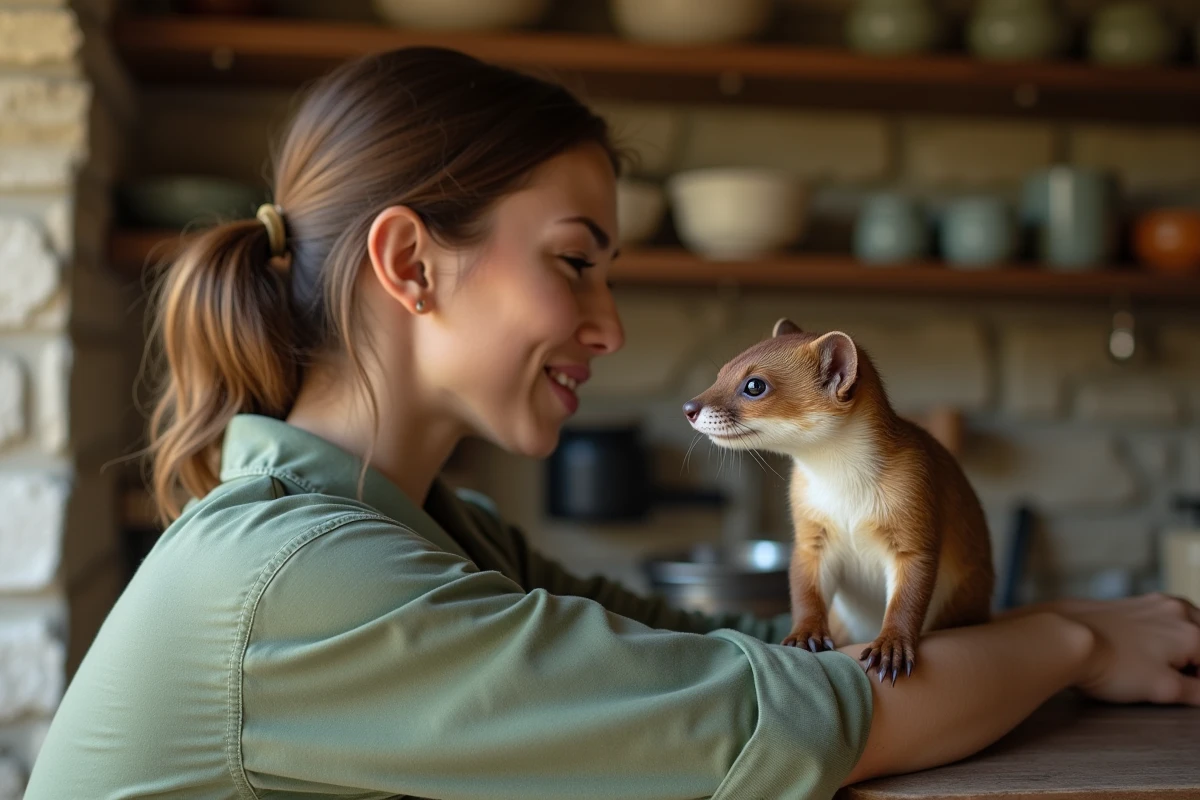
The weasel (Mustela nivalis) is the smallest carnivore in Europe. Its slender body rarely exceeds twenty centimeters, including the tail. Despite the growing enthusiasm for new pets in French households, the domesticated weasel raises questions that few articles address: its legal status, its biology incompatible with domestic life, and the frequent confusion with a much more suitable cousin, the ferret.
Weasel and ferret: the confusion that skews the debate
When an individual seeks to adopt a “pet weasel,” they most often come across ads for ferrets. This semantic shift is not trivial. The ferret (Mustela putorius furo) is a domesticated mustelid for centuries, historically used for rabbit hunting, and has since become a common exotic pet in pet shops and specialized classifieds.
The weasel, on the other hand, has never undergone a domestication process. No lineage has been selected for life in captivity. The two animals share an elongated silhouette and a keen curiosity, but their trajectories diverge completely in terms of behavior and regulation.
Those who wish to adopt a pet weasel on Amazing Pet Place will find useful insights into the reasons for this enthusiasm and the precautions to take before embarking on life with a mustelid.
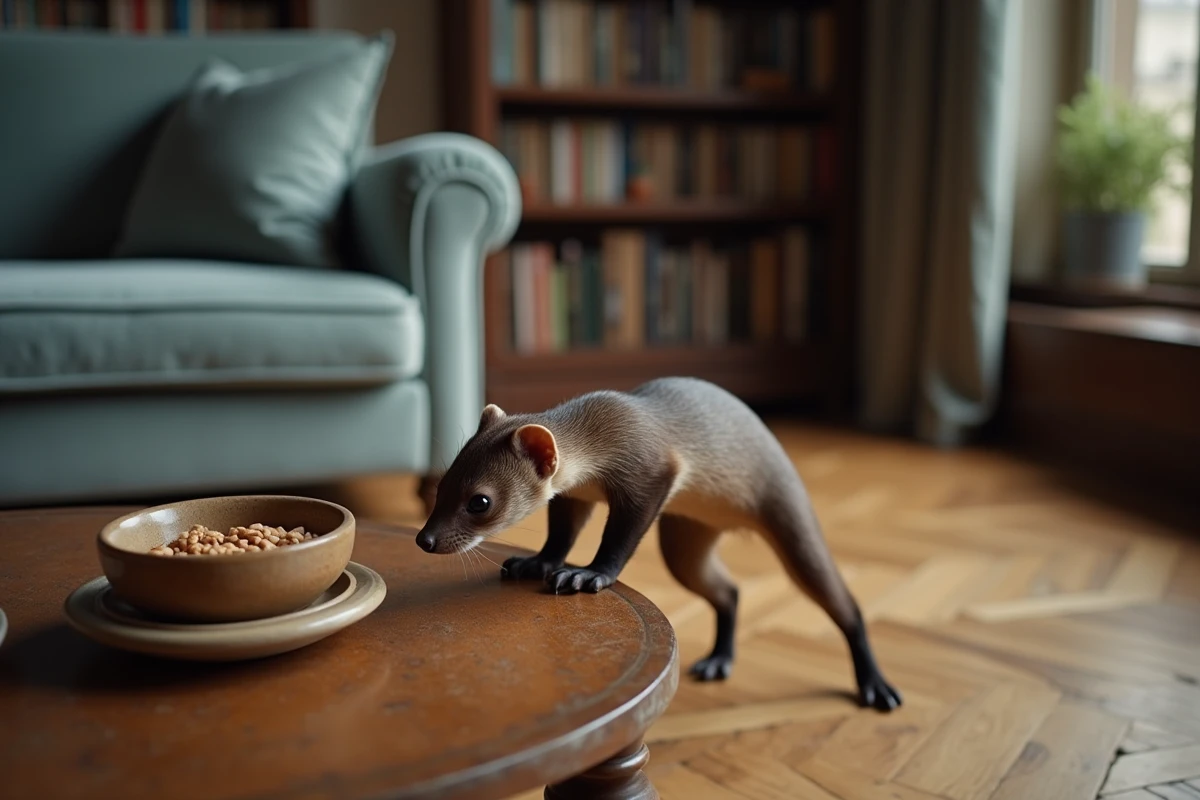
Legal status of the weasel in France: protected wild species
The weasel remains legally a protected wild animal in several French departments. Its captivity is regulated by the Environmental Code, just like other species of non-domestic wildlife. Capturing or keeping a weasel without prefectural authorization exposes one to criminal penalties.
This legal framework clearly distinguishes the weasel from the ferret. The ferret is listed on the official list of domestic animals, meaning no special authorization is required to own one. The weasel, in contrast, falls under national or prefectural orders regarding the capture and possession of wild fauna.
Procedures for keeping a non-domestic mustelid
For any wild species, possession generally requires a certificate of capacity and an establishment opening authorization issued by the prefecture. These requirements target breeding farms and zoological establishments, not individuals.
In practice, a French household cannot legally house a weasel captured in the wild. Circumventing this by purchasing an animal on a parallel market remains an offense, even if the animal appears “tame.”
Biology of the weasel: why life in a house poses problems
The weasel is a hyperactive predator. Its metabolism, among the fastest of all mammals, forces it to hunt several times a day. In the wild, it covers long distances, explores rodent burrows, and adjusts its territory based on prey density.
- Its need for continuous movement makes life in a cage or apartment profoundly unsuitable, even with play area adaptations.
- Its diet relies on live prey (voles, mice, small birds), which is difficult to replicate in captivity without raising ethical and health concerns.
- Its territorial and solitary behavior makes it unpredictable in the face of human handling, with a frequent risk of bites, even in individuals raised by hand from a young age.
The domestic ferret, after generations of selection, tolerates cohabitation with humans. It sleeps a large part of the day and accepts physical interactions. The weasel does not exhibit any of these adaptations.

Ecological risks of a wild mustelid in an urban environment
Several French naturalist associations warn about the consequences of an escape or release of non-domestic carnivores. The phenomenon, already documented for the American mink and the raccoon, is beginning to be discussed by analogy for other mustelids.
A weasel released in a peri-urban environment can disrupt the local small fauna: ground-nesting birds, lizards, micromammals. For example, tit populations are already under significant natural predation pressure without adding individuals accustomed to humans and therefore less fearful.
An additional argument against possession
The tamed animal that escapes does not have the same flight reflexes as a wild counterpart. It approaches homes, rummages through trash, and conflicts with neighborhood cats. This hybrid behavior, neither entirely wild nor domestic, complicates any attempt at reintroduction and creates neighborhood nuisances.
The domestic ferret: the legal and viable alternative for mustelid enthusiasts
For a French household attracted by the morphology and liveliness of mustelids, the ferret remains the only reasonable option. Its status as a domestic animal recognized by regulations simplifies adoption, veterinary follow-up, and insurance.
- Ferrets can easily be found from registered breeders or in specialized exotic pet shelters, where abandonments remain frequent.
- Their diet, based on protein-rich kibble or prepared raw meat, is accessible and well-documented by specialized veterinarians.
- Their lifespan in captivity can reach several years, with structured medical follow-up (vaccination, sterilization, lymphoma prevention).
The ferret is not a substitute for a weasel. It is a distinct animal with its own requirements. Adopting a ferret by default, due to the inability to keep a weasel, often leads to abandonments when the owner discovers the musky odor, the need for daily outings, or the cost of specialized veterinary care.
The fascination for the domesticated weasel largely rests on a romantic image of the small agile and playful carnivore. The biological and legal reality in France clearly points towards the ferret for those wishing to live with a mustelid. Keeping a wild weasel remains illegal for an individual, and there are no signs that this regulation will change in the short term.