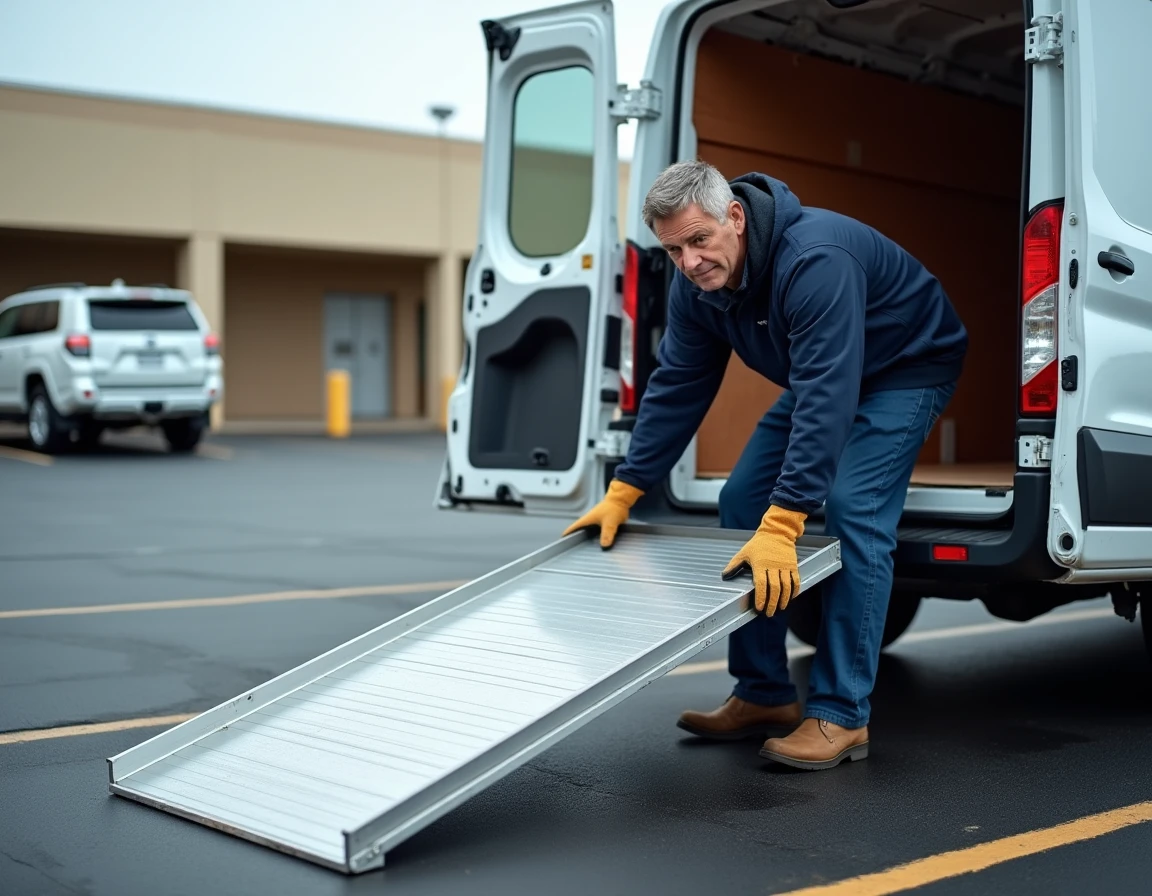
Loading a riding mower onto a trailer with a ramp that is too short or too soft is the kind of experience that doesn’t forgive. You end up with a machine that slips halfway up, edges that bend, and the unpleasant feeling that the equipment is going to tip backwards.
The loading ramps sold at Brico Dépôt cover a wide range, from the folding aluminum model to the galvanized steel rail, but user reviews tell very different stories depending on actual use.
Grip and surface treatment: the weak point that product sheets don’t show
We often talk about load capacity and length. However, in practice, the first problem reported by users concerns loss of grip after a few months of use. Ramps with perforated surfaces, common in Brico Dépôt’s aluminum range, accumulate mud, dust, and plant debris in the gaps.
When using the ramp in the rain or on wet ground, this accumulation turns the non-slip surface into an ice rink. The recommendations from INRS emphasize anti-slip and lateral retention rather than just the maximum allowable load.
In practical terms, it is in your best interest to clean the surface with a jet after each intensive loading session. A quick brush on the ribs is often enough to regain the original grip. This is a maintenance requirement that most buyers discover afterward, when the ramp starts to slip under the wheels.
To delve deeper into this topic, the comparison of Brico Dépôt loading ramps details user feedback model by model.
Aluminum ramp or steel ramp: which material for your actual load
User feedback draws a clear line between the two materials, and it doesn’t always match what is read on the technical sheets.
Aluminum for the garden and light equipment
Aluminum ramps are favored for everything that rolls on grass: riding mowers, small garden tractors, quads. Their lightweight allows one person to position and store them effortlessly. In this segment, reviews are generally positive, with ratings often above average.
The limit appears as soon as you exceed the scope of occasional gardening. Aluminum bends under repeated heavy loads, and several users report a gradual deformation of the side edges after one or two years of frequent use with equipment close to the maximum capacity.
Steel for masonry and construction equipment
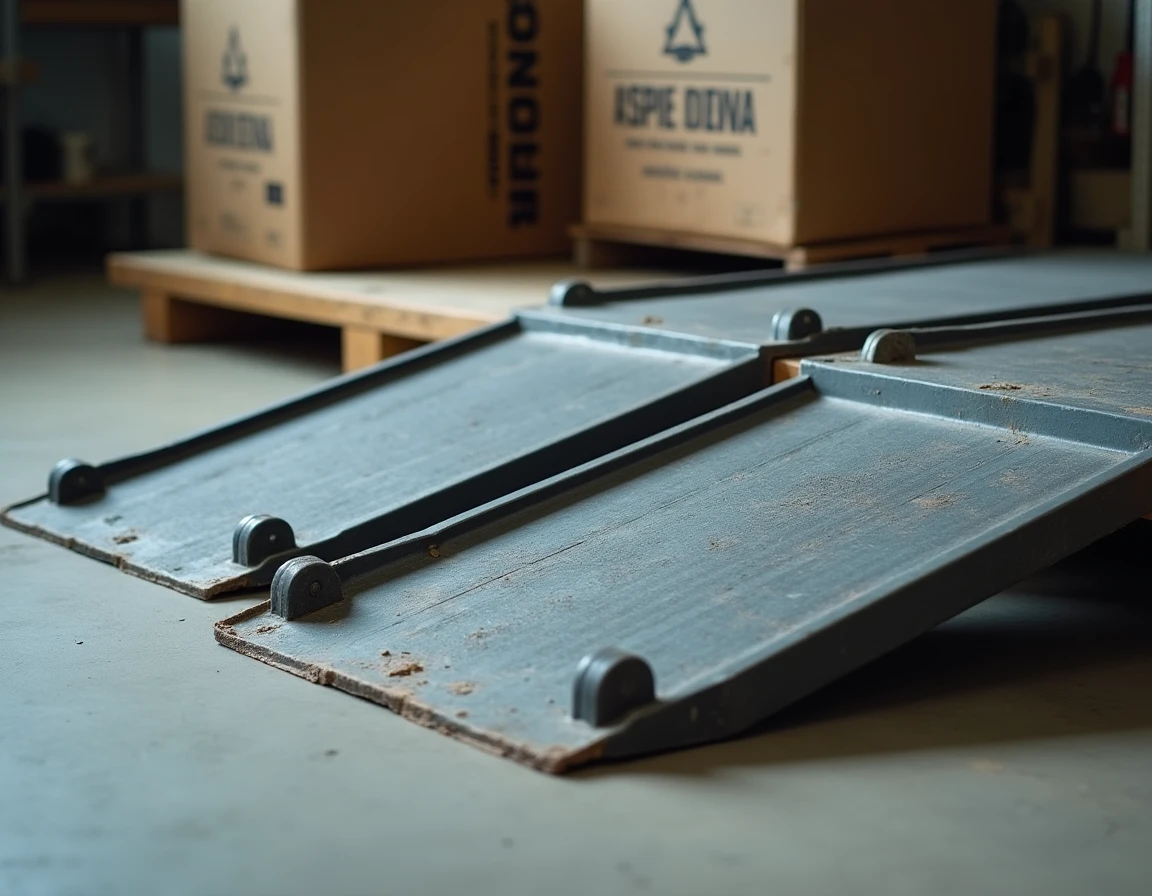
To load a mini-excavator, a heavy generator, or masonry equipment, galvanized steel remains the dominant choice in reviews. The rigidity of the rail is unquestionable, and galvanization properly protects against corrosion if you avoid leaving the ramp outside permanently.
The trade-off is in weight: it often takes two people to handle a pair of steel ramps. This is a point that professional users accept, but it deters occasional DIYers.
Slope and ramp length: the calculation that no one does before buying
The majority of disappointments expressed in reviews do not concern manufacturing quality. They stem from poor sizing from the start. A ramp that is too short relative to the height of the trailer bed creates a slope that is too steep for the equipment to load.
- A slope that is too steep prevents riding mowers from climbing without slipping, especially on wet grass stuck to the tires.
- Tracked equipment (mini-excavators) handle steep slopes better, but excessive incline prematurely wears out the pads and stresses the ramp’s fixings.
- The width of the ramp must exceed that of the wheels or tracks by at least a few centimeters on each side, or there is a risk of lateral slipping during loading.
The longer the ramp, the gentler the slope and the safer the loading. This seems obvious on paper, but shorter models sell better because they cost less and are easy to store. It’s a trade-off that should be made with full knowledge of the facts.

Lateral retention and fixing: what professional reviews value
On specialized B2B platforms, the references distributed through the Brico Dépôt Pro network receive high average ratings. Professional comments emphasize less on price and more on the consistency of manufacturing quality and one specific point: the presence of sufficiently high side edges.
A few centimeters of edge prevent the wheel from leaving the ramp in case of a slight deviation in trajectory. This is a design detail that separates models intended for regular use from entry-level ramps designed for occasional use.
The fixing to the trailer bed also deserves attention. Ramps with a simple hook stay in place by gravity, which works as long as the support surface is flat and stable. Models with strap or bolted leg fixing offer additional safety, especially when loading on sloped terrain or soft ground.
- Simple hook: sufficient for garden use on flat ground, lightweight and quick to install.
- Strap fixing: recommended as soon as working on uneven terrain or with heavy equipment.
- Bolted leg: reserved for semi-permanent installations on trailers dedicated to transporting equipment.
Feedback varies on this point depending on models and usage conditions, but the general trend of reviews converges: investing in a reliable fixing system prevents loading accidents.
The right reflex before buying remains to measure the exact height of the bed, the width of the wheels or tracks of the equipment to be loaded, and to check that the total weight does not exceed the indicated nominal capacity. A properly sized and correctly fixed ramp lasts for years without issues. The one bought at a discount without checking these three parameters ends up at the back of the garage after two uses.