
Dys disorders encompass several cognitive dysfunctions that affect specific skills: reading for dyslexia, writing for dysorthography, graphic gesture for dyspraxia, calculation for dyscalculia, oral language for dysphasia.
In middle school, these disorders clash with a school organization where each teacher applies their own materials, pace, and requirements for written output. Supporting a dys student or one in difficulty requires understanding the exact nature of the obstacle before choosing a tool or device.
Digital compensation in middle school: what technology really changes for dys students
Compensation does not aim to eliminate the disorder. It reduces the gap between what the student understands and what they can produce in the expected format. A dyslexic middle schooler may master reasoning in history-geography but struggle to transcribe it legibly in forty minutes.
Digital tools address this gap. Text-to-speech reads a text aloud while the student follows visually, relieving the grapheme-phoneme decoding. Voice dictation works the other way: the student formulates their answer orally, and the software transcribes it.
Several recent solutions combine these two functions with advanced spell-checking and simplified rewriting, sometimes referred to as FALC (easy to read and understand), tailored for dyslexic or dyspraxic profiles.
Resources compiled on the Emploi Annonces site for students in difficulty help identify categories of support that can be mobilized according to the specific disorder.
Automatically generated mind maps are another lever. They visually structure a lesson or complex instruction, benefiting students whose working memory struggles to prioritize textual information. Some publishers now integrate artificial intelligence functions capable of segmenting instructions or offering personalized audio summaries.
PAP and PPS in middle school: two support frameworks not to be confused
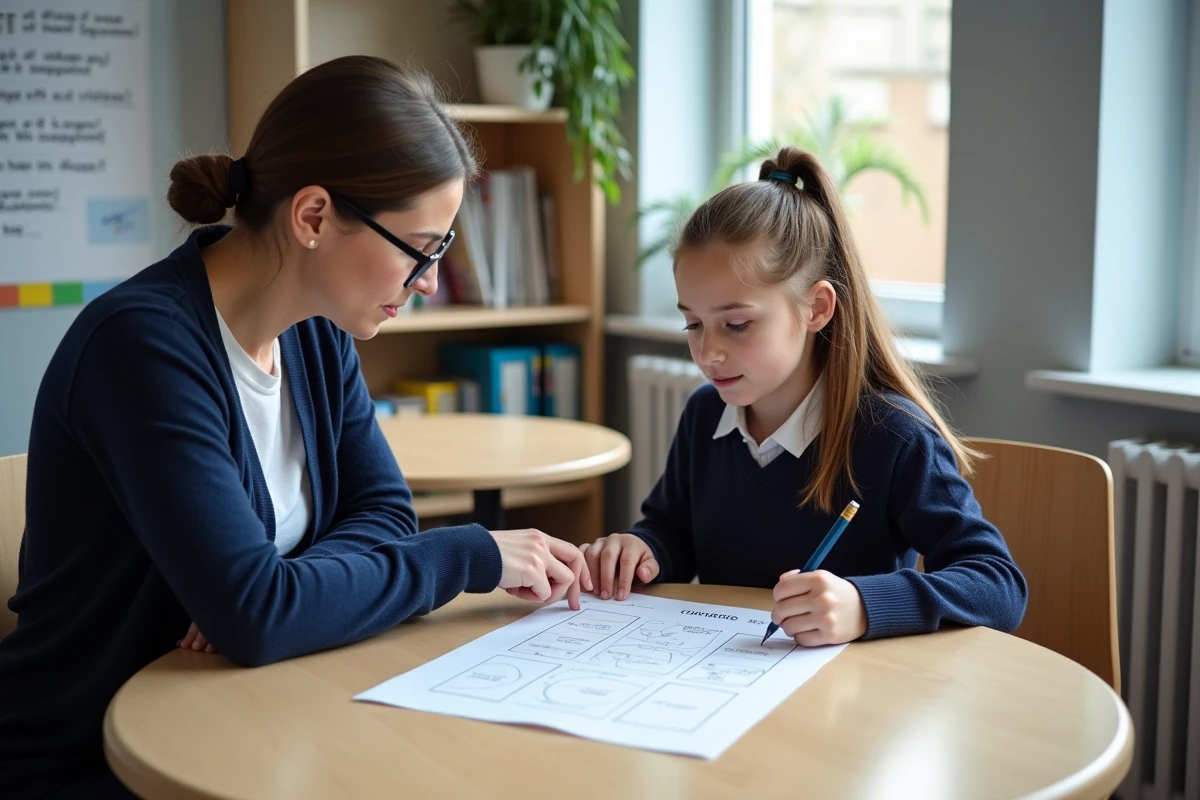
The personalized support plan (PAP) is an internal device within the institution. It concerns students whose learning disorders are lasting and impact their schooling, without falling under a recognized disability by the MDPH. National Education texts specify that the PAP also applies to students with ADHD (attention deficit disorder with or without hyperactivity), in addition to dys disorders.
The PAP can be requested at any time during schooling, by the family or the educational team. It entitles students to pedagogical adjustments in class and, often overlooked, exam accommodations for the middle school diploma.
The PPS (personalized schooling project), on the other hand, goes through the MDPH. It addresses situations where the disorder is recognized as a disability and can open the right to the intervention of an AESH, to adapted educational materials funded, or to a timetable adjustment.
How to choose between PAP and PPS
The distinction lies in the degree of compensation needed. If pedagogical adjustments (extra time, adapted materials, use of a computer) are sufficient, the PAP meets the need. When the student requires human assistance or specific materials assigned by administrative decision, the PPS becomes the appropriate framework.
- The PAP is revisable each year during an educational team meeting, without an MDPH file.
- The PPS involves an evaluation by the multidisciplinary team of the MDPH and a formal follow-up via the GEVA-Sco.
- Both frameworks allow for exam accommodations, but the PPS may include compensations that the PAP does not cover (human assistance, adapted transport).
Concrete pedagogical adjustments: adapting materials without burdening teaching work
Adapting does not mean creating a parallel course. The most effective adjustments focus on the format of documents, not on the disciplinary content.
For a dyslexic student, changing a document to a sans-serif font, size 14, line spacing 1.5 reduces decoding fatigue. Some free fonts like OpenDyslexic emphasize the differences between mirror letters (b/d, p/q). The time cost for the teacher remains marginal if the document template is prepared once at the beginning of the year.
For dyscalculia, displaying calculation steps on separate lines, with a color code for each operation, helps the student follow the logic without losing track in a compact sequence of numbers.
Free tools available without technical training
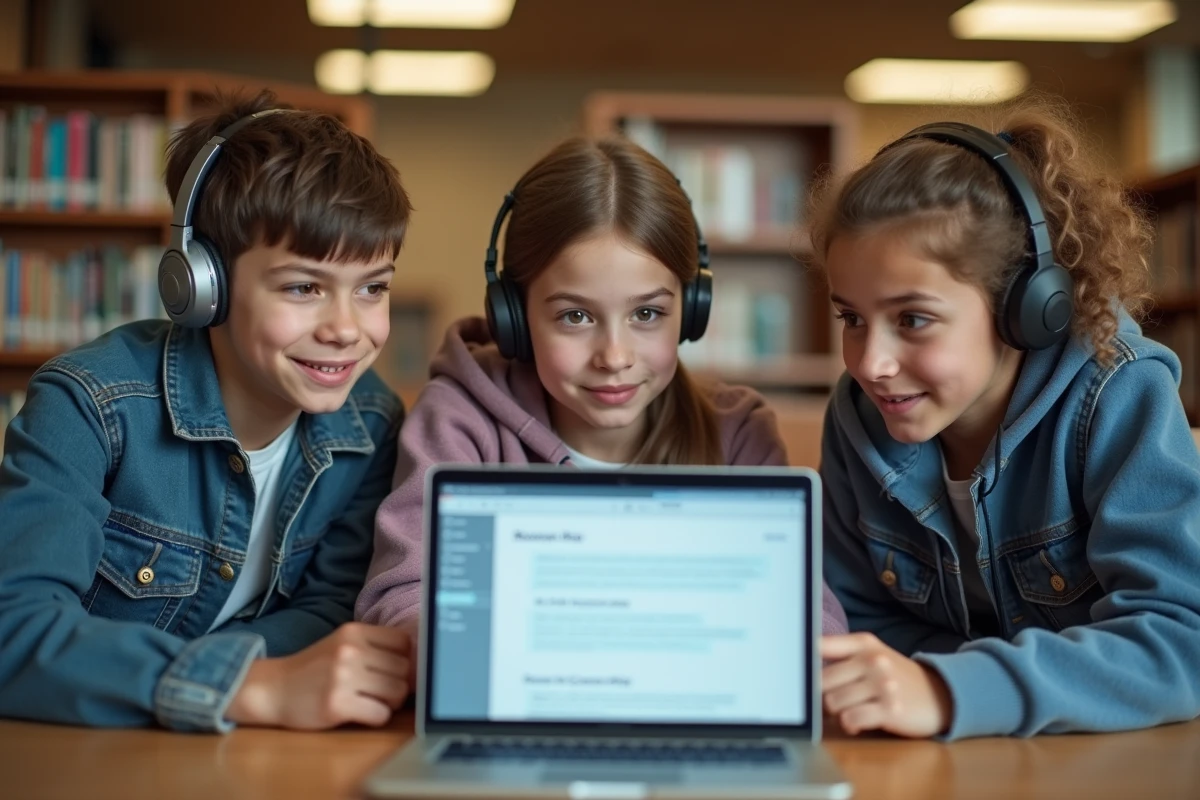
- Online toolkits like “Trousse GéoTracés” replace physical geometric instruments for dyspraxic students whose fine motor skills are impaired.
- The reading mode integrated into browsers (Firefox, Edge) automatically simplifies the layout of a website or online document.
- Browser extensions that color syllables or highlight alternating lines facilitate visual tracking for struggling readers.
- The voice dictation function integrated into Windows, macOS, and ChromeOS allows text production without a keyboard, usable in class without additional software.
Continuity of adjustments after middle school: from the diploma to higher education
A PAP established in middle school does not stop at the diploma. Orientation documents remind that adjustments can continue in high school and then in higher education through the student support plan for students with disabilities (PAEH). The transition requires that the file be transmitted and that the family requests it from the new institution.
This continuity remains a weak point in the system. The change of institution between middle school and high school, and then between high school and university, regularly causes breaks in support. Archiving the PAP or PPS in an accessible format and transmitting it upon enrollment is the most direct precaution to prevent the student from starting from scratch each school year.