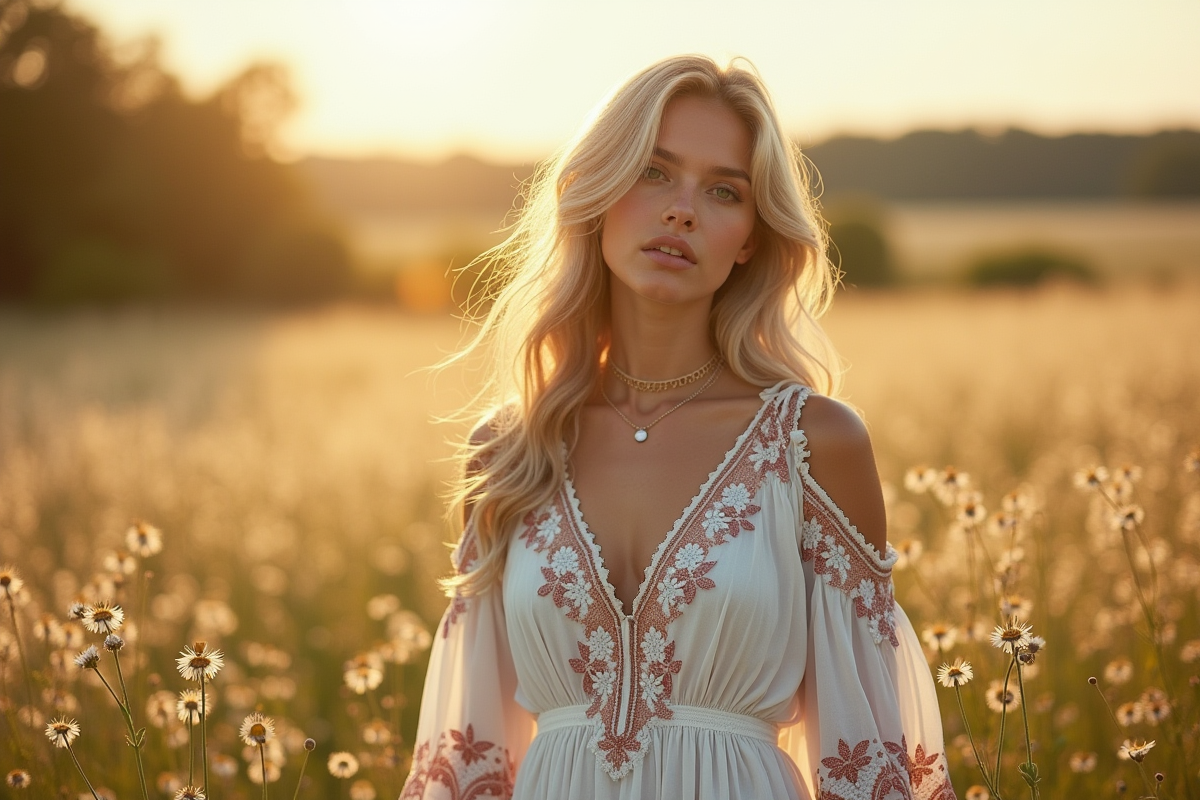
Contemporary bohemian fashion, with its appeal for authenticity and craftsmanship, celebrates delicate embroidery as a true work of art. Fashion designers, in search of uniqueness, incorporate these refined patterns into their collections, transforming each garment into a one-of-a-kind piece. Flowing dresses, airy blouses, and even accessories are adorned with intricate embroidery, recalling ancestral traditions while infusing a modern touch.
This fusion of traditional technique and contemporary design captivates with its timeless charm. Embroidery, far from being relegated to the past, finds new life in the bohemian universe, subtly and elegantly highlighting the richness of this style.
The Renaissance of Embroidery in Contemporary Bohemian Fashion
The bohemian style, which has made a comeback in the fashion scene since the early 2000s, has established itself as a symbol of freedom and creativity. Inspired by the bohemian and Romani communities of Eastern Europe in the 19th century, it is associated with a relaxed, quirky, and colorful aesthetic. The hippie movement of the 1960s and 1970s adopted its elements as a symbol of rejection of social norms.
From Craftsmanship to Haute Couture
The chic bohemian style, which takes the main lines of the bohemian style, incorporates more elegant and dressed elements. Fashion icons like Sienna Miller and Kate Moss popularized this refined and sophisticated look between 1990 and 2000. Embroidery, once seen as outdated, is experiencing a revival today thanks to the enthusiasm for craftsmanship and handmade items.
- My bohemian lace top
- Long and flowing dresses
- Light and airy blouses
Patterns and Techniques
Floral prints, fringes, and natural materials characterize the bohemian style. Small and delicate floral patterns, leaf or plant prints, and stripes, used with care, enhance chic bohemian creations. The use of English embroidery, for example, adds a touch of refinement while remaining true to the bohemian spirit.
| Pattern | Use |
|---|---|
| Floral prints | Characterizes the bohemian style |
| Leaf or plant prints | Used in chic bohemian style |
| Stripes | Used with caution |
Delicate embroidery, far from being a mere ornament, becomes a signature of contemporary bohemian style. It illustrates the desire to merge artisanal heritage and modernity, offering unique pieces that tell a story. 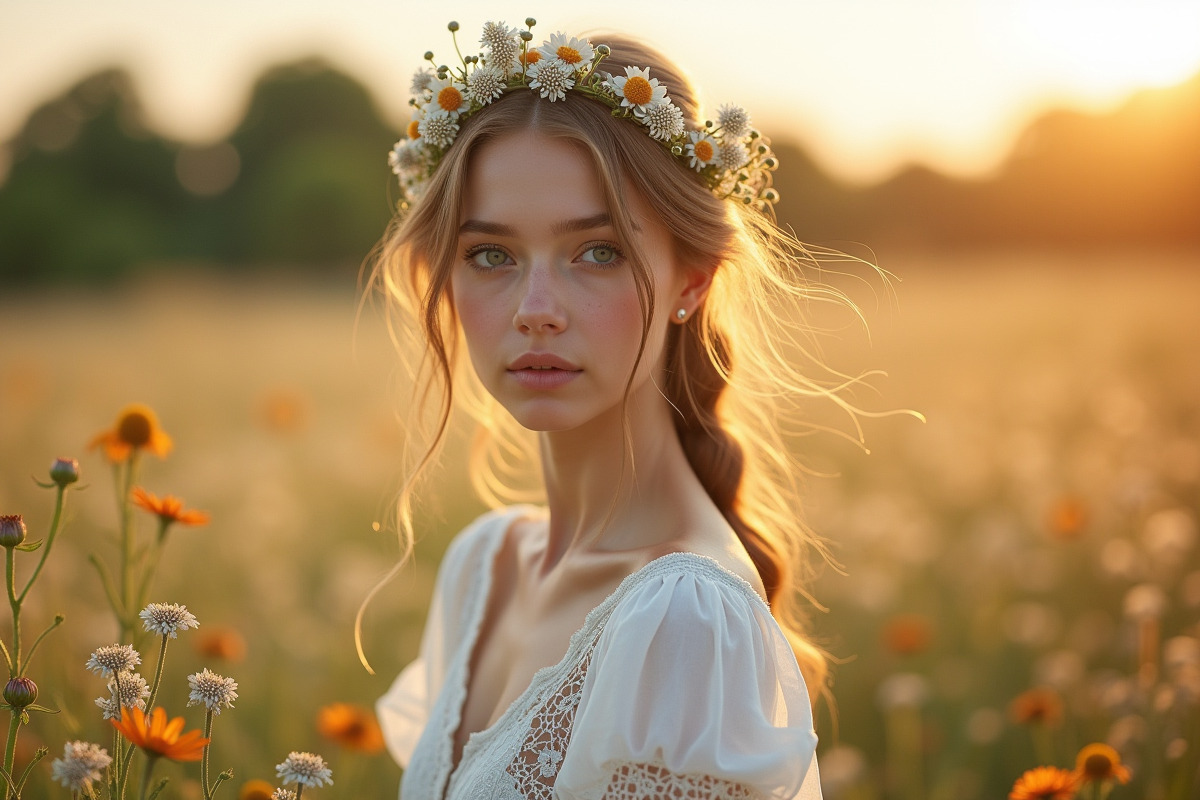
The Techniques and Patterns of Embroidery that Enhance Bohemian Style
Contemporary bohemian style is distinguished by its rich and varied patterns, integrating ancestral artisanal elements. Floral prints and natural materials are at the heart of this aesthetic. Used delicately, they reinforce the bohemian identity while adding a touch of sophistication.
Floral Patterns and Leaf Prints
Small and delicate floral patterns, often hand-embroidered, add a poetic dimension to bohemian garments. These patterns, inspired by nature, are omnipresent in chic bohemian collections. The leaf or plant prints, less conventional, bring a touch of originality while remaining true to the natural spirit of the style.
Stripes and Fringes
Stripes, although classic, are used sparingly to avoid a too conventional look. They often pair with freer patterns to create a harmonious contrast. Fringes, on the other hand, add movement and texture, reminiscent of traditional clothing from bohemian and Romani communities.
Natural Materials and Embroidery
Natural materials such as cotton, linen, and wool are favored for their comfort and durability. These fabrics, often left in their natural shades, are enhanced by delicate embroidery. English embroidery, for example, is frequently used to add a note of refinement without compromising the authenticity of the garment.
Delicate embroidery is much more than a simple ornament in contemporary bohemian style. It symbolizes a successful fusion of artisanal heritage and modernity, offering unique pieces that tell a story.