
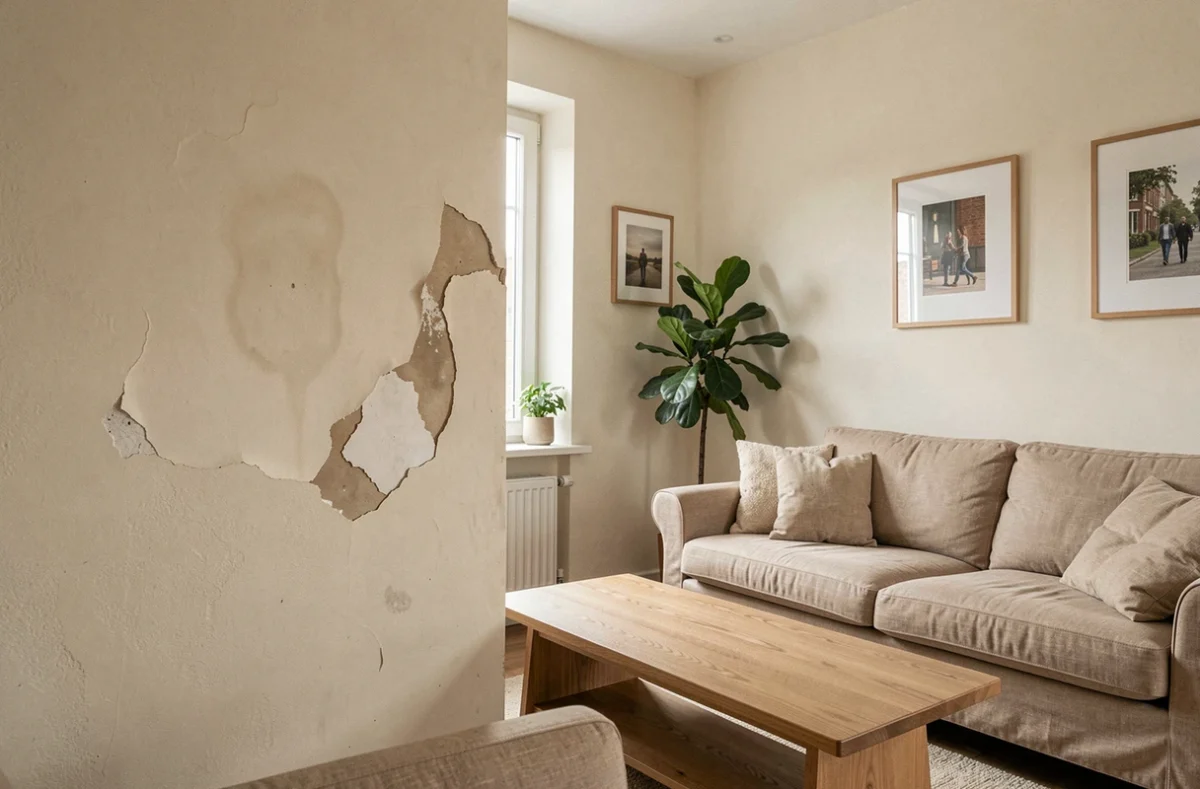
Water damage between the third and second floors, a bulging ceiling, damaged parquet flooring, and three insurers passing the buck: the building’s insurer, the landlord’s insurer, and the tenant’s insurer.
In Luxembourg, this scenario is a regular occurrence in condominium buildings, highlighting an issue many residents discover too late. The building’s insurance does not cover residents’ personal belongings, and the landlord’s policy does not necessarily protect the contents of the apartment or cover the tenant’s liability to neighbours.
Leak between two floors: three policies, three different areas of cover
Consider a pipe bursting between two apartments. Water seeps into the neighbour’s apartment below, damaging furniture, blistering paintwork and ruining parquet flooring that needs replacing. Who pays for what?
Condominium insurance generally covers common areas (water pipes, the building’s structure, stairwells). Damage inside privately owned units, however, falls under other policies. The landlord’s insurance generally protects the walls, floors and fixed fittings in their unit. Practical guidance for Luxembourg condominiums also stresses the importance of checking the excesses and exclusions in the collective insurance policy, particularly for water ingress and frost damage.
Then there is the furniture, household appliances, clothing and laptop belonging to the neighbour affected by the leak. These belongings are only covered by the occupant’s personal insurance. Without their own policy, the affected tenant has to bear the cost of replacing their belongings, even if the leak did not originate in their apartment.
To compare the available options for apartment insurance in Luxembourg, you first need to identify exactly what each policy covers in the chain.
Tenant liability and home insurance in Luxembourg: what the law says
Luxembourg’s Civil Code provides for tenant liability in the event of fire, subject to certain exceptions (unforeseeable events, construction defects, or fire spreading from another dwelling). This tenant liability means that tenants may be required to pay for damage caused to the rented property.
However, there is no general legal requirement for tenants to take out home insurance. This is an important distinction. In practice, almost all Luxembourg leases require tenants to take out insurance under a contractual clause. Being uninsured is not illegal, but it often constitutes a breach of the lease, with the risk of termination that this entails.
This distinction between a legal requirement and a contractual obligation can make all the difference if a dispute arises. A tenant without insurance who causes a fire is personally liable, with no safety net.
Home insurance cover: the essentials to check in every policy
Policies offered in Luxembourg vary from one insurer to another, but there is a core set of cover that every apartment occupant should check before signing.
- Personal liability: covers damage you cause to third parties (a neighbour’s apartment being flooded, damage during a move). This is the cover that applies in the scenario of a leak between floors.
- Fire and explosion cover: pays for rebuilding or repairs after a fire, including damage caused by smoke or firefighting efforts.
- Water damage: leaks, burst pipes and overflows. Check whether the cover also includes leak detection costs, which are often billed separately.
- Theft and vandalism: the contents of the apartment (furniture, appliances and personal belongings) are insured against burglary, subject to limits that vary by policy.
- Glass breakage: windows, built-in mirrors and ceramic hobs, depending on the policy.
This core cover is not always enough. Two points deserve particular attention in the Luxembourg context.
Flooding: a separate risk from standard water damage
A leaking tap and the Alzette rising are not handled in the same way when it comes to compensation. Luxembourg insurers’ policy terms often treat flooding as a separate event, with its own exclusions, excesses and limits. Check explicitly whether floodwater entering your home is covered by your policy, especially if your apartment is in a flood-risk area or on the ground floor.
Compensation schemes described in the press often relate to French law on natural disasters, which does not apply in Luxembourg. Do not rely on generic articles without checking the local rules.
Personal belongings versus fixed fittings
A common misconception is that the landlord’s insurance also protects the tenant’s belongings. The fitted kitchen, bathroom fixtures and glued-down parquet flooring generally belong to the landlord and are covered by their policy. The tenant must take out their own “contents” cover for furniture, electronics and personal belongings.

Set limits and excesses based on the actual value of your belongings
The combined value of an apartment’s contents is often underestimated. Add up the furniture, household appliances, clothing, computer equipment and valuables: the total often exceeds the amount covered by a basic policy.
Two practical steps to take when buying or renewing a policy:
- Compare your policy’s “household contents” limit with a realistic inventory of your belongings. If the limit is too low, you will only receive partial compensation in the event of a total loss.
- Check the excesses for each type of claim. A high excess for water damage in an older building with worn-out pipes means you are only partially insured.
- Check whether valuables (jewellery, artwork, musical instruments) need to be declared separately or added to the policy to be covered above a certain limit.
The annual premium alone tells you very little without comparing the limits, excesses and exclusions. A cheaper policy with an excess of several hundred euros for theft can end up costing more than a slightly more expensive policy with no excess.
Before finalising a policy, reread the policy schedule and pay particular attention to the claims most likely to arise in your situation: water damage in an older condominium building, theft on the ground floor, or flooding in a high-risk area. A suitable policy first covers the risks most relevant to your home, not a theoretical list of cover you are unlikely to need.