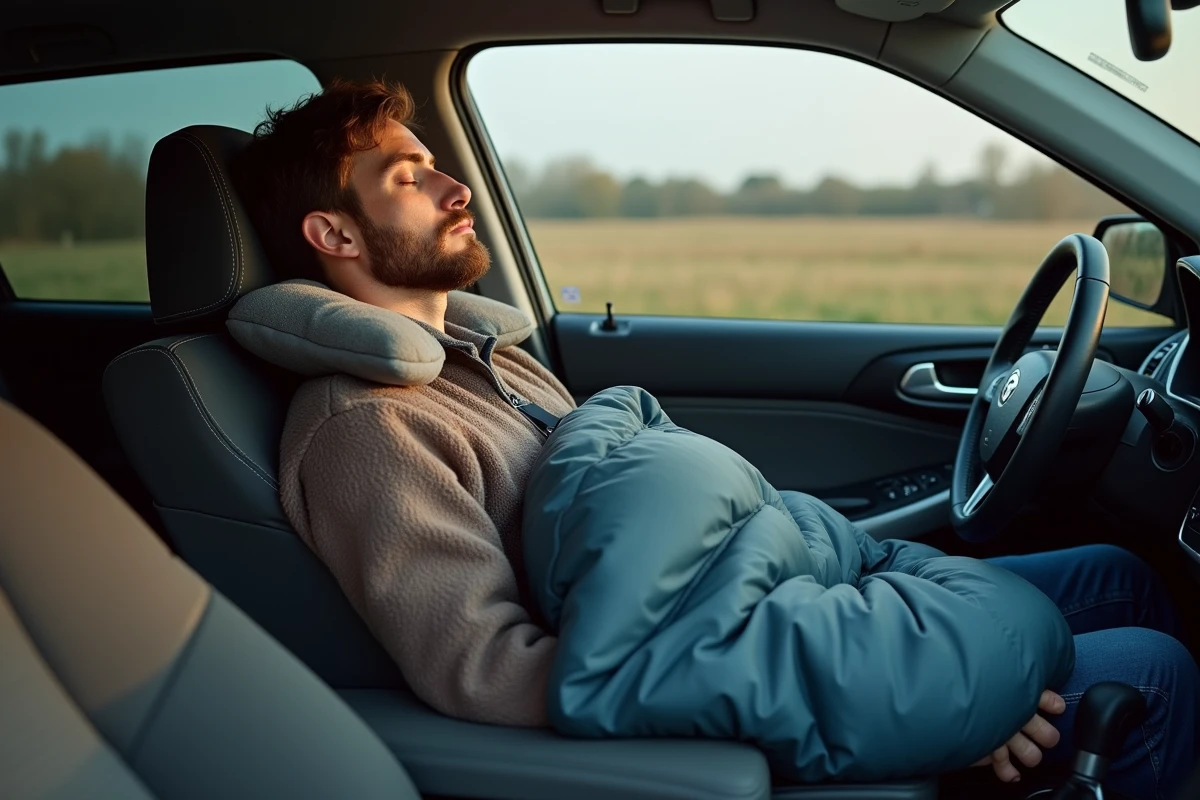
Belgium does not have a single federal law that explicitly prohibits or allows overnight stays in vehicles. The regulatory framework is based on a tangle of municipal regulations, regional road codes, and local jurisprudence. This ambiguity creates very different situations from one municipality to another, sometimes even from one parking lot to another within the same city.
Wild Camping and Overnight Stays in Vehicles: An Underestimated Legal Distinction
The most common confusion concerns the automatic assimilation between sleeping in one’s car and wild camping. A ruling by the police court of Liège in 2022 established a useful framework: the absence of external installations prevents the qualification of wild camping. As long as the driver does not deploy an awning, wedges, or furniture outside the vehicle, and respects the current parking regulations, sleeping in the cabin does not fall under the regulatory definition of camping.
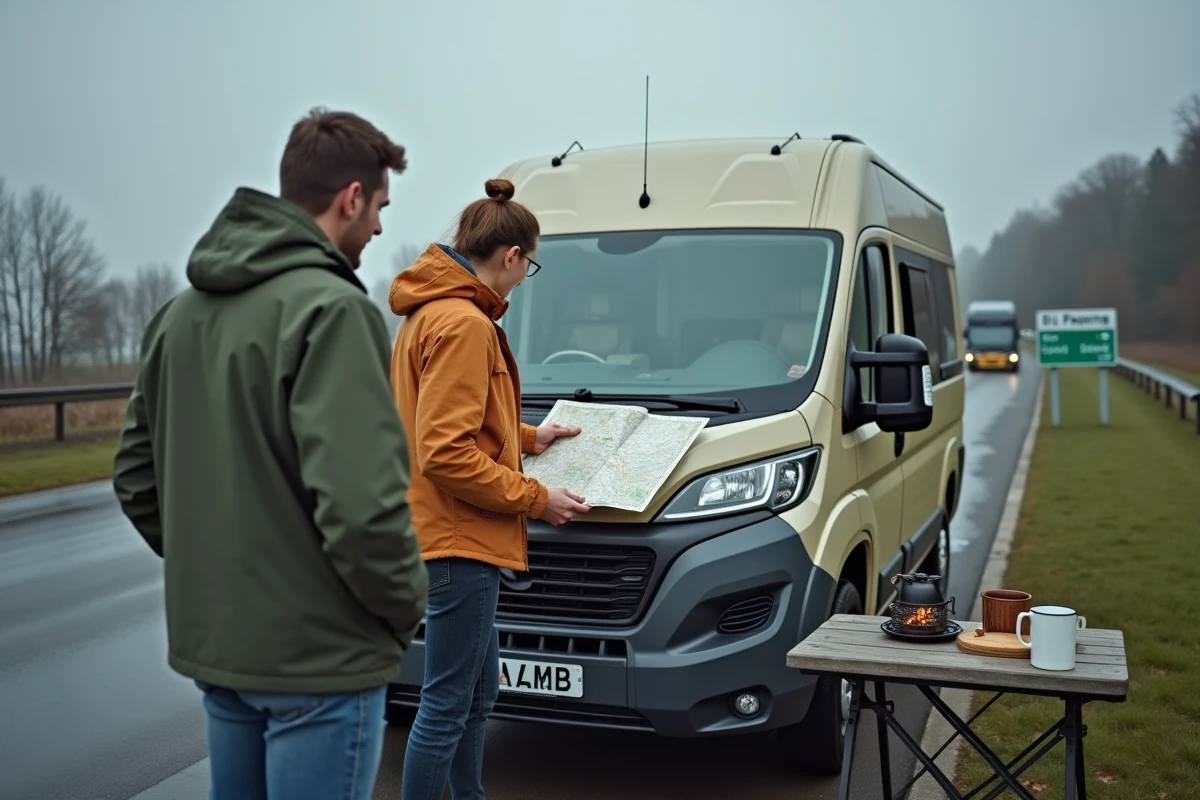
This distinction has concrete consequences. It means that a traveler sleeping in a reclined seat or in a converted van with closed doors is in a more protective gray area than someone who sets up a folding table on the sidewalk. Field reports vary on this point: some officers still issue fines, relying on local police regulations rather than the concept of camping.
To understand in detail the regulations governing sleeping in one’s car in Belgium, one must therefore cross-reference federal parking law with the specific provisions of each municipality.
Municipal Orders in Wallonia and Flanders: Rules That Change from One Parking Lot to Another
Since 2022, several Walloon municipalities have tightened their stance. Dinant has incorporated articles into its general police regulations prohibiting prolonged nighttime parking in its public parking lots. Huy followed in 2023 with a modification specifically targeting parking lots in commercial areas and along the Meuse.
These orders allow for fines even in the absence of public order disturbances. Simply remaining parked beyond a certain hour is sufficient. This trend also affects leisure center parking lots, where municipalities seek to discourage overnight stays by motorhome users and van lifers.
In Flanders, the situation varies just as much. Some coastal municipalities tolerate overnight stays in dedicated parking lots, while others impose strict restrictions during peak season. No centralized map lists municipal prohibitions, forcing travelers to check on-site signs or contact the municipality before settling in.
What the Signs Don’t Always Say
A parking lot without a no-parking sign does not guarantee a peaceful night. The municipal police regulations may prohibit overnight stays without specific signage on the ground. Checking with the local police station or the municipality’s website remains the most reliable way to avoid an unpleasant surprise.
Rest Areas and Legal Alternatives for Overnight Stays in a Car
The rest areas along Belgian highways are the simplest option. They allow prolonged stops, including overnight, as long as you remain in the vehicle. Their usage and lighting provide an acceptable level of safety, even if comfort remains basic.
Outside the highway network, other possibilities exist:
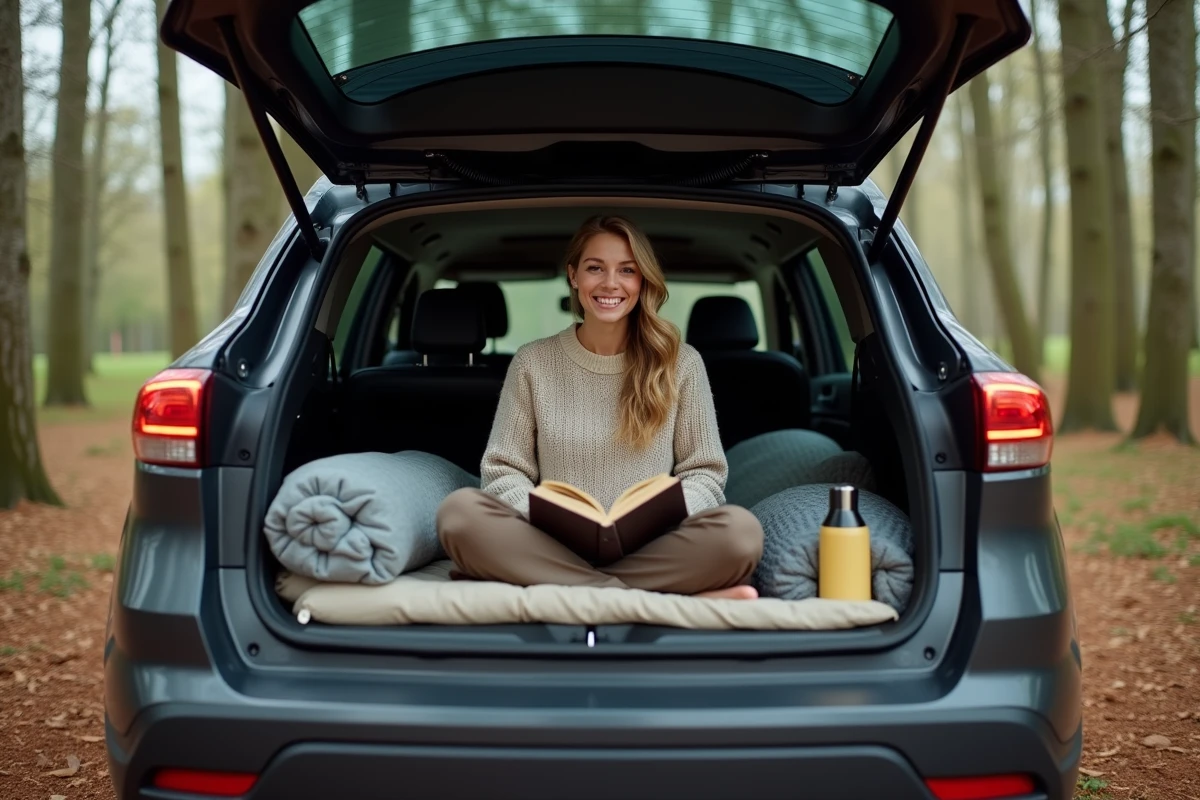
- The parking lots of certain natural or forest areas, particularly in the Ardennes, where tolerance is generally greater than in urban areas. Check for the absence of time barriers before committing to an overnight stay.
- Municipal or private campgrounds that offer discounted rates for one night, sometimes without reservation. Several municipalities in the Ardennes maintain this type of offer.
- Collaborative platforms like “shared parking” where individuals offer their land. The legal framework for these exchanges remains unclear, but the practice is growing.
Highway rest areas remain the only space where overnight stays are not subject to any municipal restrictions. Everywhere else, local law prevails.
Safety and Equipment: What Makes the Difference Between a Viable Night and a Risky One
The choice of location affects safety as much as equipment. Parking in a well-lit, frequented but not noisy area, with a clear exit, reduces most risks related to theft or intrusion.
In terms of equipment, a few items can radically change the comfort of a night in a car:
- Blackout curtains or custom-cut sunshades for each window. They ensure privacy and limit condensation by reducing thermal gaps.
- A folding mattress or a mattress topper suitable for the sleeping surface. Sleeping in a reclined seat can cause neck pain by the second night.
- Passive ventilation (slightly open window with a magnetic mosquito net) to prevent the accumulation of CO2 and humidity in the cabin.
Ventilation is the most neglected safety point by occasional travelers. A closed cabin quickly accumulates condensation, promotes mold on textiles, and degrades sleep quality.
Insurance and Coverage in Case of an Incident
Sleeping in your vehicle does not change the coverage of Belgian auto insurance, provided the vehicle is parked in an authorized location. However, parking in violation of regulations at the time of an incident can complicate coverage. Checking the clauses of your contract before a multi-night road trip helps avoid unpleasant surprises.
The Belgian regulatory framework for overnight stays in vehicles remains fragmented and fluid. Municipalities have a wide autonomy to restrict or tolerate this practice, and recent developments in Wallonia show a trend toward tightening. Consulting the police regulations of each stop before staying overnight remains, to date, the only truly reliable precaution.