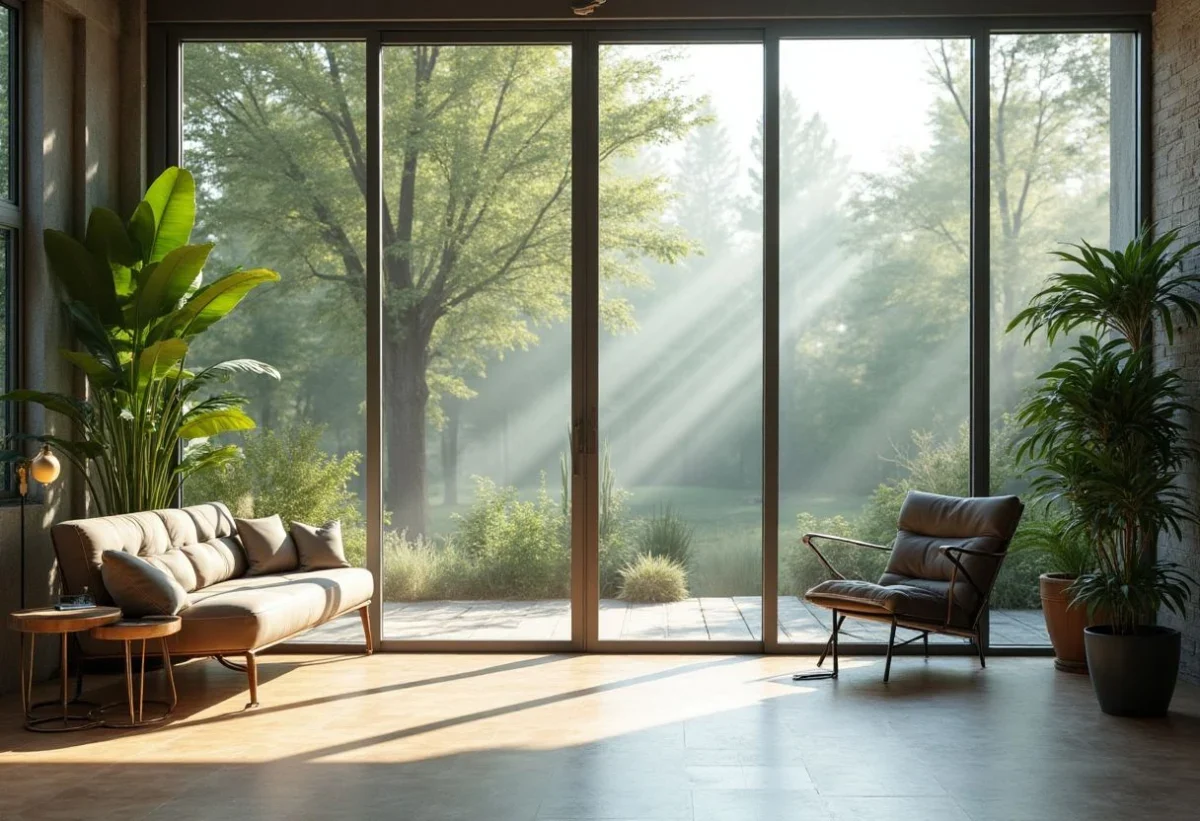
A symbol of elegance and refinement, the glass wall has traversed the ages and styles to establish itself as an essential architectural element. Its ability to transform any space into a bright and welcoming place makes it a popular choice for both architects and homeowners concerned with aesthetics and functionality. Its history is rich, its use varied, and the materials that compose it are as numerous as the styles it can adopt. Whether to create a subtle separation between two rooms or to flood a room with natural light, the glass wall harmoniously blends design and functionality.
Origins and evolution of the glass wall
Glass walls have deep historical roots that date back centuries, and they continue to captivate with their timeless charm.
Initially, glass walls appeared in the 19th century in industrial buildings. They were used to bring natural light into dark workshops, thus creating a more pleasant working environment. Over time, their function evolved, and they gradually integrated into domestic architecture, adding an elegant industrial touch to modern interiors. In bourgeois homes, they were often used to separate spaces while allowing light to flow through.
Today, glass walls have become a symbol of modernity and design, adapting to various architectural styles, from chic minimalism to industrial retro.
The different types of glass walls
There is a surprising diversity of glass walls, each with its own characteristics and advantages.
- Workshop glass wall: Inspired by the old artists’ studios, it is characterized by its metal frames and clean lines. It is perfect for creating an urban and contemporary atmosphere.
- Wooden glass wall: Offering a warmer touch, this glass wall fits perfectly into rustic or Scandinavian interiors. It combines tradition and modernity.
- Custom glass wall: Tailored to the specific needs of each client, it allows for total customization, whether in dimensions, materials, or finishes.
- Interior glass wall: Designed to separate rooms without closing them off, it has become a popular choice for creating open and airy spaces in homes and apartments.
Aesthetic and practical advantages
Adopting a glass wall in your living space offers a multitude of advantages that go well beyond mere aesthetics.
One of the major assets of the glass wall is its ability to transform an interior. By allowing natural light to flow freely from one room to another, it visually enlarges the space and creates a sense of continuity. A glass wall can also serve as a light and elegant separation between different functional areas, such as between the kitchen and the living room. Its installation can improve the thermal and acoustic comfort of a room, thanks to the use of modern insulating materials.
Finally, it adds a unique touch to the space it occupies, whether it is an interior glass wall in a Haussmannian apartment or a skylight in a modern loft.
How to integrate a glass wall at home
For those looking to integrate a glass wall into their home, several factors must be considered to successfully complete this project.
- Space analysis: Before installation, it is essential to assess the available space and decide on the optimal location. This will maximize the benefits of light and design.
- Material selection: The choice of materials is crucial to ensure that the glass wall harmonizes with the rest of the interior. Metal, wood, and aluminum are common options.
- Professional installation: Hiring a professional for the installation ensures a flawless and safe result. Experts can also provide advice on the most suitable style and design.
- Interior glass wall: To give a new dimension to your space, integrate a interior glass wall for a decorative and functional touch.