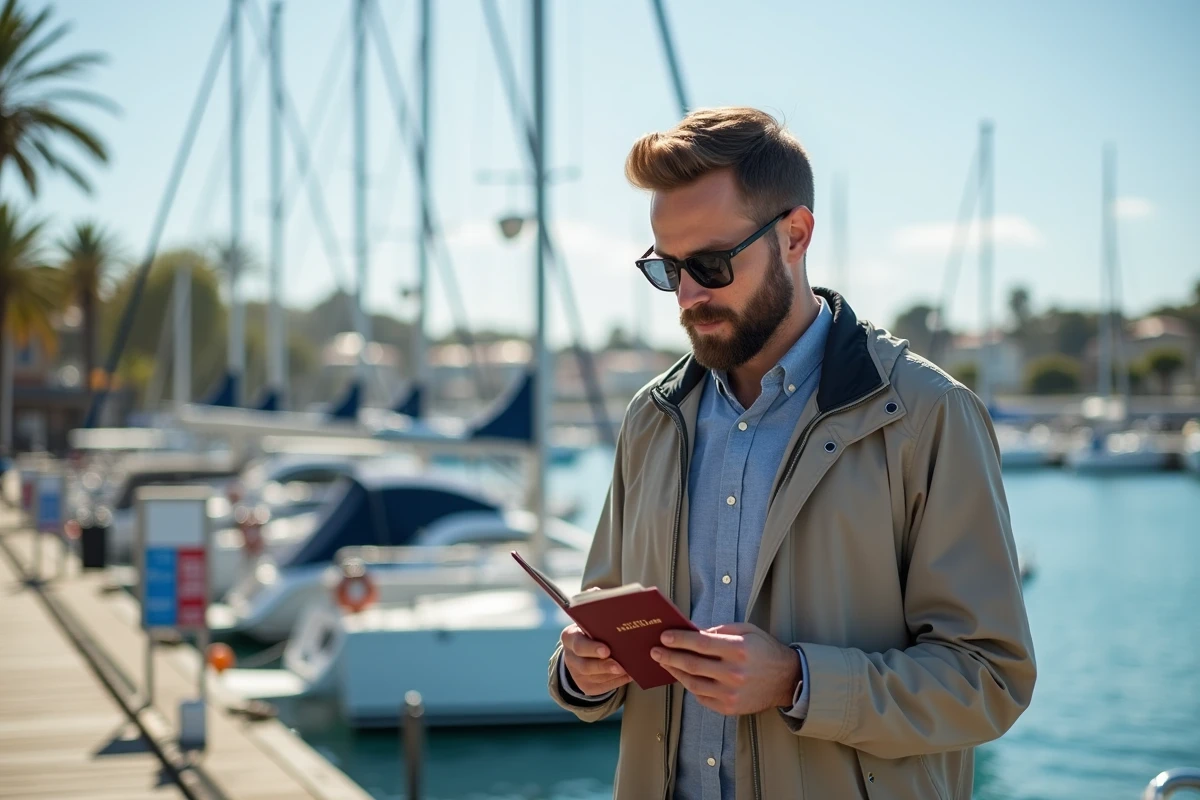
A French boat license does not open many doors for navigation in Australia. Here, each State and Territory sets its own recognition criteria: sometimes, you need to translate documents, and sometimes you must take a local test. There are no uniform rules, but a mosaic of procedures, where the Australian administration is waiting for you.
Depending on the region, even European licenses must undergo conversion or provide additional documentation. These requirements fluctuate based on the size or power of the vessel, as well as the duration of your stay.
French boat license in Australia: what recognition and what limits?
Setting sail under a French flag in Australia is not something to be taken lightly. The recognition of a boat license issued in France, whether coastal or offshore, is far from automatic. Each Australian State applies its own criteria, and the acceptance of a foreign license depends on local regulations. You cannot rely on a universal exemption: you must inform yourself precisely about the rules in effect for your next navigation area.
In the majority of Australian States and territories, the French license is not sufficient. Authorities often require an International Certificate of Competence (ICC), which France issues under specific conditions. Before casting off, it’s best to ask the only question that matters: will your French license actually allow you to navigate legally, or will you need to go through a conversion? For example, in Queensland or New South Wales, certified translation of the license is mandatory, and it is not uncommon for an additional examination to be required.
This changing administrative landscape creates a zone of uncertainty for French boaters. Navigating outside of France means negotiating with each administration. And the question of boat licenses for going to Australia is not limited to filling out a form: in case of a check, your responsibility is at stake, and penalties can be imposed. Anticipating, gathering information, preparing your documents: recreational boating, here as elsewhere, requires diligence and foresight.
What steps to take to navigate Australian waters?
To set sail on the Australian waters, a simple French boat license is not enough. Australian authorities lay down several administrative milestones before allowing you to glide over the waves. Therefore, it is essential to prepare each step carefully, or risk seeing your project go overboard.
The first step is non-negotiable: the certified translation of the license is mandatory. It must be done by a sworn translator and will be required for any application to local authorities. In some States, such as Queensland or Tasmania, you may also be asked for a detailed nautical CV outlining your boating experience.
The minimum age is not the same everywhere: you will often need to prove that you are over 16 years old to be allowed to navigate. Civil liability insurance, tailored for recreational boating and specifically covering Australia, is also required. Organizations such as Maritime Safety Queensland or Transport for NSW may also request a local identification number or verify the validity of your visa.
Here are the documents and proofs usually required by Australian authorities to validate your license:
- Certified translation of the French license
- Specific insurance proof
- Presentation of a detailed nautical CV
- Compliance with the minimum age requirement
In summary: each State imposes its own list of documents and scrupulously checks the conformity of applications. Thorough preparation remains the best guarantee for navigating peacefully on Australian waters.
Focus on local rules, organizations to contact, and resources to prepare your trip well
Recreational boating in Australia, whether by sailing boat or motorboat, entirely depends on the regulations of each State. There is no uniform national rule: each region, from Queensland to Victoria, imposes its own conditions for admitting foreign boaters.
To avoid any missteps, it is better to contact the relevant organizations directly: Maritime Safety Queensland, Transport for NSW, Marine and Safety Tasmania… These administrations answer all questions about the recognition of foreign licenses, rental conditions, or the necessity of an International Certificate of Competence for Vessels (ICC). Their official website is full of useful details, and a simple contact can save you from many inconveniences in case of a check.
Some States allow temporary navigation with a foreign license, provided you present a certified translation. Others impose a local examination or prior validation. For boat rentals, the rules differ: some rental companies are satisfied with a translated French license, while others require a test or a nautical CV. Whether for coastal navigation or inland waters, vigilance and anticipation remain essential.
To prepare your navigation calmly, it is recommended to:
- Consult the official websites of the organizations in each State in advance
- Prepare the certified translation of your French boat license
- Gather proof of insurance and nautical experience
In Australia, each body of water tells its own requirements. It is these that will determine whether you will hoist the mainsail tomorrow or remain at the dock. It’s up to you to lay the groundwork, for once there, no one will come to rectify an incomplete application or a shaky authorization. Navigating at the other end of the world also means embracing the local rules of the game, turning administrative constraints into promises of adventure.