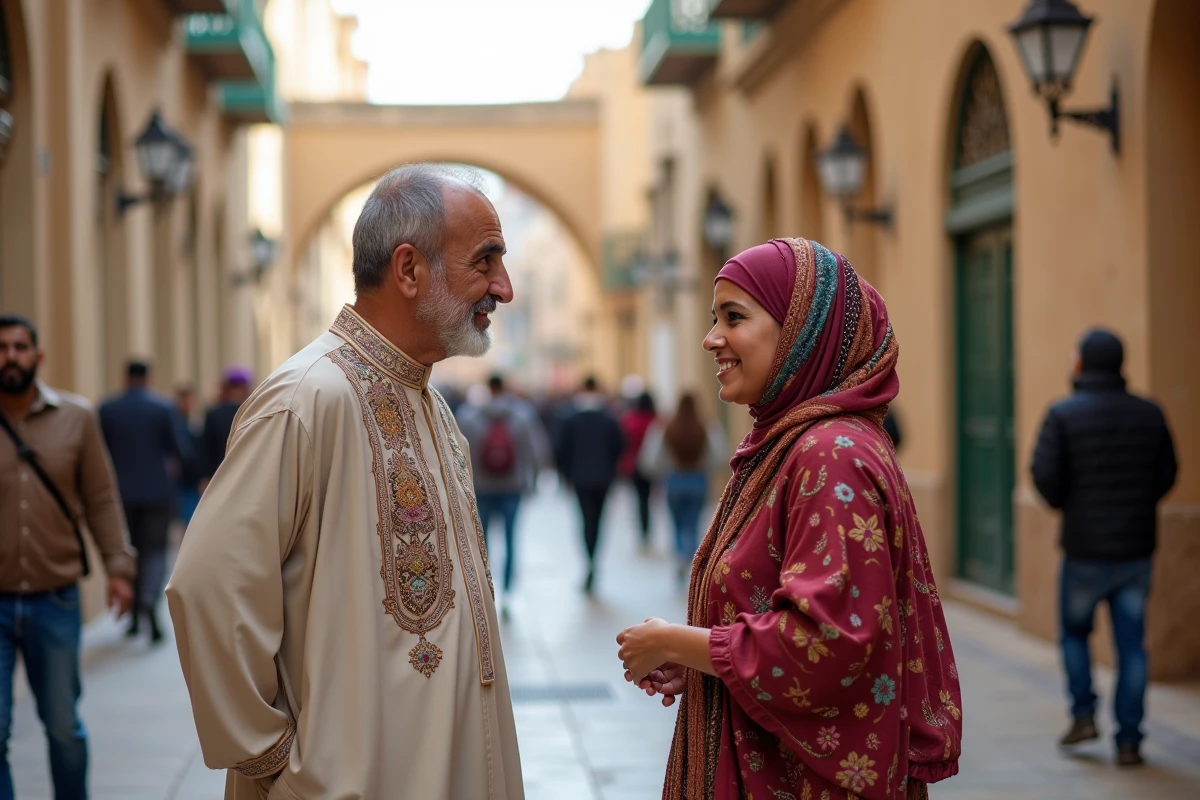
The Sidi M’Cid bridge, inaugurated in 1912, supports a daily traffic that far exceeds its initial forecasts. Since 2017, the old town has recorded an annual growth of small businesses above the national average. The tram now connects the peripheral neighborhoods without interruption, disrupting commuting habits and changing the location of local businesses.
The visitor numbers at historical sites reveal a clear increase since the inclusion of the Ahmed Bey Palace in the national heritage. The city’s markets, for their part, maintain their pace despite the rise of online commerce.
Constantine, between millennial heritage and modern life
It is impossible to cross Constantine without feeling this rare weaving of history and daily life. Here, every street corner reminds us how stone and memory intertwine. The ancient Cirta has never let go of its Mediterranean openness or its aspirations to grow. The suspended bridges, true feats, connect much more than steep banks: they bring generations, neighborhoods, lifestyles closer together, from the city center to the urbanization of Ali Mendjeli.
Facing the buzz of the markets, the Emir Abdelkader Mosque raises its minarets. Just a stone’s throw away, the Ahmed Bey Palace, listed as a heritage site, recalls the glorious hours of this capital which established itself on the cultural scene of the Arab world in 2015. Constantine is also a city focused on youth: the Emir Abdelkader University attracts thousands of students each year, whose energy invigorates the campuses and the Zighoud Youcef neighborhood, giving the social fabric a fresh breath.
The arrival of the tramway and the transformation of the Mohamed Boudiaf airport accompany the demographic surge and urban expansion, reaching the outskirts of Hamma Bouziane, El Khroub, or Ain Smara. The Wilaya’s plans outline a city that moves forward, without sacrificing its identity and by strengthening its public facilities.
For those who want to closely follow these developments, lagazettedeconstantine.com offers ongoing insights into what is happening: news, culture, urban projects. A useful reference for both locals and curious visitors looking to understand the dynamics of the region.
What makes daily life in Constantine so unique?
Living in Constantine means experiencing a particular rhythm: here, traditions and modernity do not face off; they move forward together. The Judeo-Muslim coexistence has left a legacy that is still felt today, through the seasons. In the beating heart of the city, the sounds of Malouf persist, carried by a youth that has not given up on Arabo-Andalusian music, a common matrix of a living past. Every alley, every square is a stage where the dialogue between history and present is invented daily.
Ramadan changes the face of the city: as night falls, the terraces fill up, and the markets are filled with spicy aromas and sweet specialties. On the heights, Ben Badis or Sidi Mabrouk remind us how hospitality has transcended time. Here, anonymity does not reign: everyone recognizes their neighbor, and the community maintains its close ties.
The Emir Abdelkader University and the university hub give the city a cosmopolitan and dynamic face. Students from Algeria, France, or further afield fill libraries and cafes, especially those in Didouche Mourad or Zighoud Youcef. This mix nourishes an intellectual and cultural climate that makes Constantine elusive for anyone wanting to confine it to a fixed image.
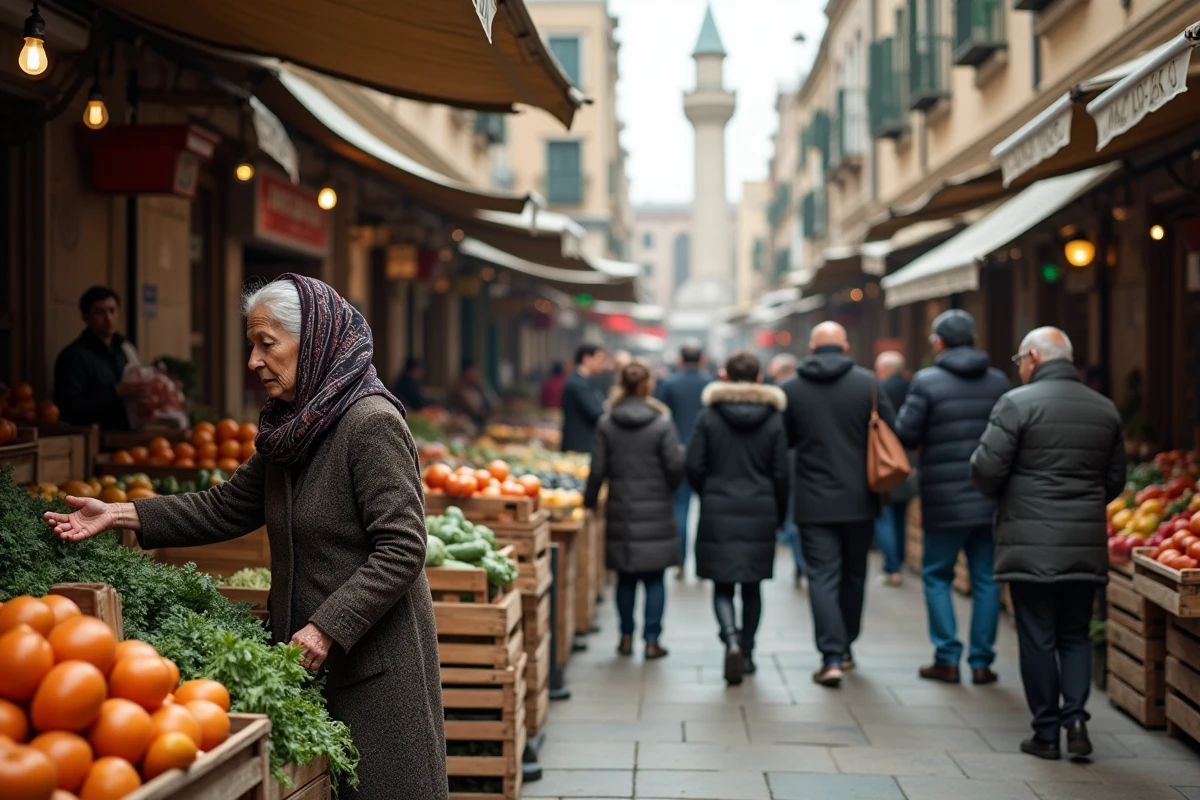
Flavors, encounters, and discoveries: exploring the highlights of the city
As you stroll through the city center, behind the Haussmannian facades, life pulses to the rhythm of the markets. The stalls overflow with local products: ripe fruits, vibrant vegetables, spices. It’s not just about chorba or makrouds: the culinary art of Constantine is expressed in every gesture of the artisans, those who perpetuate the tradition from Sidi Mabrouk to Zighoud Youcef.
Here are some places and experiences that embody this richness in daily life:
- Cafes, like Café Nedjma, where students, retirees, and artists meet over an espresso or mint tea: here, debates about current events, culture, or the city’s memory arise naturally.
- The National Cirta Museum, which weaves a thread between the millennial history of the region and contemporary creation, thanks to its exhibitions and workshops open to all.
- Handicrafts, in the workshops near the Sidi Rached bridge or in the shops of Ain Smara: pottery, embroidery, repoussé copper, testify to a know-how that has been passed down and reinvented.
Tourism in Constantine today attracts a diverse range of visitors, eager to discover the suspended bridges, wander through the residential neighborhoods of Sidi Mabrouk, or soak up the vitality of Ali Mendjeli. The city also reveals itself through the memories of those who have left their mark, from Dalida to Enrico Macias, voices that extend the collective memory.
Constantine is not a fixed backdrop: it is a city that moves forward, reinvents itself, and refuses to turn its back on its past. Here, modernity does not erase history; it builds upon it. One only needs to pause for a moment, at the turn of an alley or an animated terrace, to grasp this unique vibration that makes Constantine much more than just a stop on the map: a crossroads where each day rewrites its own story.